



Preparing Students for a World That Doesn’t Exist Yet
The future of education is not about predicting the next job. It is about preparing students to keep learning.
Ask a student, “What do you want to be when you grow up?” and you will probably hear familiar answers: doctor, engineer, lawyer, teacher, designer.
But the world of work is changing faster than career lists can keep up.
Artificial intelligence, automation, biotechnology, climate technology, data science and other emerging fields are creating roles that did not exist a decade ago. At the same time, many existing careers are being reshaped by technology.
So how can schools prepare students for careers that may not even exist yet?
At Young Scholarz, we believe the answer is not to predict the future. It is to develop students who are ready to adapt to it.
The future belongs to lifelong learners
The traditional path was relatively straightforward:
School → University → Career → Retirement
Today, careers are becoming less linear. Students may change industries, learn new technologies, build multiple specialisations or even move into professions that have not yet been created.
This makes lifelong learning one of the most important skills students can develop.
A student who knows how to research, ask questions, evaluate information, learn independently and respond to feedback can continue developing long after formal education ends.
The goal, therefore, should not simply be to help students get their first job.
It should be to help them remain capable of learning throughout their working lives.
Emerging careers require more than technical skills
:max_bytes(150000):strip_icc()/technical-skills-list-2063775_final2-5b9ffdaec9e77c00502e1c2f.png)
The careers of the future will certainly require technological knowledge. However, technical skills alone will not be enough.
Consider the growing influence of AI. Students may need to understand how AI works, but they will also need to evaluate its outputs, recognise bias, question unreliable information and make responsible decisions about how it should be used.
This is where skills such as critical thinking, communication, creativity, collaboration and problem-solving become essential.
A future engineer will need more than engineering knowledge.
A future scientist will need more than scientific knowledge.
And a future professional working with AI will need more than the ability to operate an AI tool.
They will need to know when to trust it, when to question it and when to think beyond it.
Why strong academic foundations still matter
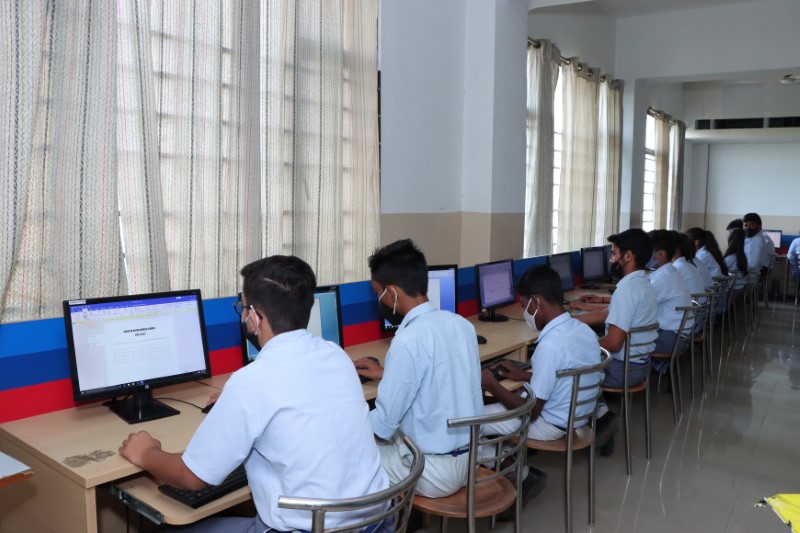
Preparing students for the future does not mean abandoning traditional academic subjects in favour of constantly chasing the latest technology.
In fact, strong academic foundations may become even more important.
Reading develops interpretation.
Writing develops communication.
Mathematics develops logical reasoning.
Science develops evidence-based thinking.
History develops an understanding of perspective and context.
Literature encourages students to examine ambiguity, language and different ways of seeing the world.
These abilities are transferable. The technology may change, but the need to think well does not.
At Young Scholarz, we see academic learning and future skills as complementary rather than competing priorities. A strong education should give students both subject knowledge and the ability to apply that knowledge in unfamiliar situations.
Teach students how to think, not just what to remember

A future-ready classroom should not only ask:
“What is the correct answer?”
It should also ask:
- What evidence supports your answer?
- What assumptions are you making?
- Could there be another interpretation?
- What would you do if your first approach failed?
- How could you investigate this further?
These questions encourage students to become independent thinkers.
They also prepare students for a world where information is abundant but good judgement is scarce.
With AI making it increasingly easy to generate answers, students need to become better at evaluating those answers.
The valuable skill is no longer simply finding information.
It is knowing what to do with it.
The Young Scholarz approach

At Young Scholarz, our approach to education is built around more than examination preparation.
Examinations matter, and strong academic results open important opportunities. But we also want students to develop the confidence to approach unfamiliar questions, construct independent arguments, respond to feedback and take ownership of their learning.
Whether a student is preparing for IB, IGCSE, A Levels or another international curriculum, our aim is to help them develop skills that extend beyond a particular syllabus.
Because the question we should ask is not only:
“Will this help a student in their next examination?”
It is also:
“Will this help them when the question is one they have never seen before?”
That is where genuine learning begins.
At Young Scholarz, we believe education should do more than prepare students for the next examination. It should prepare them for the next question, the next challenge and ultimately, the next version of the world.
The future may not exist yet. The skills to navigate it can start developing today.